
Landfills at maximum capacity

Where does our everyday solid waste end up?
Within the GAM (Greater Metropolitan Area) there are two sanitary landfills: the Uruka Environmental Technology Park and the Aczarrí Environmental Technology Park. The Aczarrí landfill's lifespan was reduced from 11 years to 3.5 years by the end of 2024 and currently receives around 2,100 tons per day . The Uruca landfill receives approximately 500 tons per day, and by the end of 2024 it was estimated to have a lifespan of only 3 months , so it is likely currently operating above capacity.

Together, they handle approximately 2,600 tons of waste each day. The biggest problem we are experiencing as a country is that both landfills are reaching their capacity, and this year both technology parks could be expected to close. If this were to happen, waste from the Greater Metropolitan Area (GAM) would have to travel many kilometers to reach other sanitary landfills such as those in Santa Cruz, Limón, or Montes de Oro , but this would only shorten their lifespan.
reduce and the situation continues to worsen.
What are the main consequences?
In addition to the environmental costs we know as air, soil, and water pollution, waste accumulation generates an increase in methane gas, which is even more harmful than carbon dioxide because it traps 80 times more heat in the atmosphere . This further contributes to global warming, leading to other consequences such as prolonged droughts, intense rainfall and flooding, ocean warming, and damage to agriculture, among others.
When landfills reach their maximum capacity, foul odors and diseases caused by epidemics become an increasingly frequent and accelerating reality that affects us all. Poor waste management leads to the proliferation of disease-carrying mosquitoes, flies, scavenging birds, etc. 4 We might think that the problem lies mainly in the actions that the municipalities have or have not taken, but in reality, the root comes from our homes.

According to data from the Ministry of Health, in 2024 the total amount of ordinary solid waste was 2 million tons. Approximately 70% ended up in sanitary landfills and dumps, and only 13.78% was recoverable .<sup> 5 </sup> The remaining percentage ended up in uncontrolled sites. Of all the waste, 50% is of organic origin, 35% is recyclable, and the remaining percentage is what should be going to sanitary landfills.<sup> 6</sup>
.
Why does the root of the problem come from our homes?
Unfortunately, we Costa Ricans have never been taught that environmental education is a priority. Costa Rica is known as a green country, but what actions underpin this reputation? The actions we take at home, on the street, at the beach, in the office, and in our daily lives in general matter and are what could define us as people committed to the environment and contribute to that vision.
that the world has of our country.
Furthermore, this shouldn't just be an international demonstration to contribute to Costa Rica's green image; we must understand the impact of our actions. Our first thought when we see this waste is simply to throw it away, but the truth is, its life cycle doesn't have to end there.
What actions can we take to reduce the burden on landfills?
As mentioned earlier, 50% of waste is organic. This includes food scraps such as vegetable, fruit, and egg peels, coffee and tea grounds, food waste, garden and pruning debris, and so on. Being organic, this waste can be returned to the soil as fertilizer, a process known as composting. Compost is the product obtained through the decomposition of organic matter. This not only reduces waste but also improves soil quality.
Composting can be done at home by creating a homemade composter. This can be done directly in the ground or in a container, bin, or other receptacle. Just make sure it has adequate ventilation, as this is essential for the process. This document from the Ministry of Health provides step-by-step instructions on how to create a homemade composter. Alternatively, if you have the option of buying a composter, this could be a faster solution, as some are rotating and the material decomposes more quickly. These can be purchased on the 360 Green Solutions website , for example.

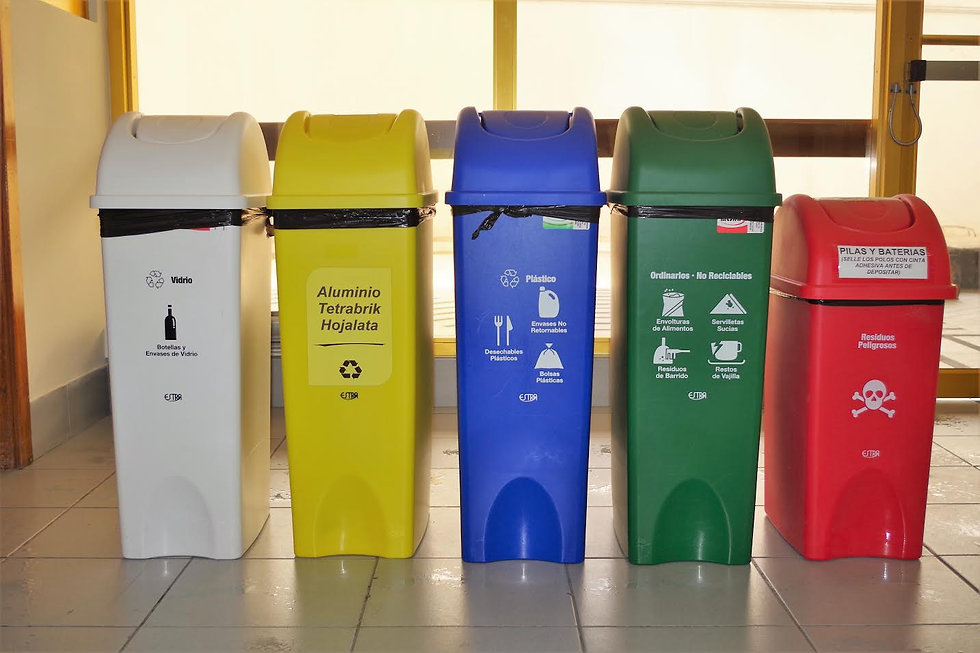
Now, regarding the 35% of waste that is recyclable, this refers to waste that can be reused or recycled. This includes plastic and glass bottles, cardboard boxes, paper such as documents and paper bags, glass jars, aluminum cans, clothing in good condition, electronic devices, furniture, and books, among other things. Many Costa Ricans have at least some idea of what recycling is, but we don't put it into practice. This is another strategy that can help reduce waste in landfills.
From our homes, we can begin sorting these items and then take them to recycling centers. We can also reuse plastic or glass containers to store grains, rice, coffee, or spices, create planters, store small items, use them as dispensers, or for art/decoration projects. This helps us not only to care for the environment but also to save a little money. Our actions as citizens and inhabitants of this planet make a bigger difference.
important and vital to what we imagine.
Final reflection
Most of the time we blame municipalities or the government for not implementing more concrete measures to solve these kinds of socio-environmental problems, but we actually play a very big role in the difference our daily practices can make. Sometimes we think that these kinds of situations won't affect us because of where we live or the privileges we have, but we all live in the same country and on the same planet, and sooner than we think, we're going to face them.
consequences.
It's true that environmental education in Costa Rica needs improvement, but it primarily needs to start at home because not all schools provide this type of information. If we already know what recycling is, we must put it into practice and not just leave it as theory. Sorting waste takes less than a minute of our time, and it's these small actions that make all the difference. Reading about composting for the first time in this article or another opens our eyes to other ways we can contribute.
This is not just an institutional problem, but a shared responsibility. We must also motivate others to become aware of these situations so they can make their own decisions and choose to be part of the change. As members of this society, we have the power to transform our reality if we begin to recognize that our actions have a direct impact on it. Let's not waste any more time and start doing something for our country and the only planet worth fighting for!
References:
Costa Rica's Ministry of Health. “Costa Rica faces a national risk due to the
Landfill closure.” January 12, 2026.
https://www.ministeriodesalud.go.cr/index.php/prensa/67-noticias-2026/2336-
Costa Rica faces a national risk due to the closure of landfills
Ministry of Health of Costa Rica. “At the limit: Sanitary Landfills in the Greater Area
Metropolitan area on the verge of closure.” October 21, 2024.
https://www.ministeriodesalud.go.cr/index.php/prensa/61-noticias-2024/1973-al-
landfill limits in the greater metropolitan area are about to close
United Nations Environment Programme (UNEP). “The
Methane emissions are accelerating climate change. How can we
reduce them?” August 20, 2021. https://www.unep.org/es/noticias-y-
reports/reports/methane-emissions-are-accelerating-the-change-
climatic-like
Fernández Vicente, Gabriel. (2020). The problem of waste management
Solid waste in Costa Rica. 360 green solutions, September 30, 2020 . https://www.360-
Ministry of Health of Costa Rica. Integrated Management of Ordinary Waste. Data
for recovery and disposal. 2024.
https://app.powerbi.com/view?r=eyJrIjoiYjcwMzAxYjgtZDY4NS00MjVlLTk3NTktMD
g3ZDkwOTBiZjI0IiwidCI6IjQ0ZWU5MjU1LWRjMDktNGI1Zi1iNjVjLTY0YjY3MDUyY
jllMiIsImMiOjR9
Alvarado, Josué. (2025). “'That's why we no longer have sanitary landfills': 94%
"Most of Costa Rica's waste goes to landfills." El Observador. June 11, 2025.
https://observador.cr/por-eso-es-que-ya-no-tenemos-rellenos-sanitarios-94-de-los-
waste in Costa Rica goes to landfills/


Comments